12 / 12 · Alanya Dental Help
Wisdom tooth removal is the extraction of one or more third molars, the last teeth to erupt at the back of the mouth, usually in the late teens or twenties. At Alanya Dental Help, our dental clinic in Alanya, we assess wisdom teeth with an examination and X-rays and remove them when they cause pain, infection or problems for the neighbouring teeth.
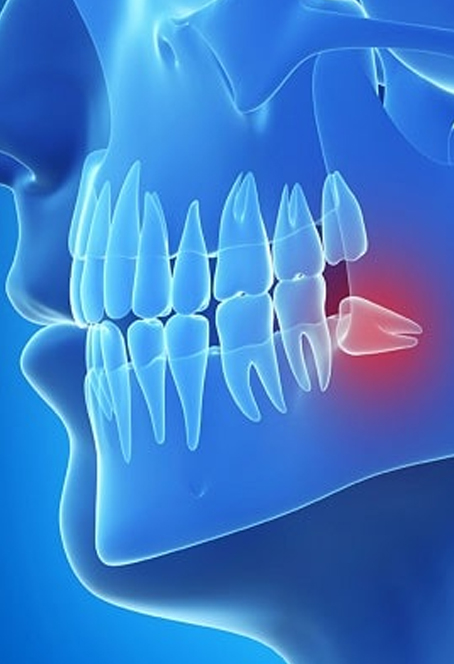
Not every wisdom tooth needs to come out. Teeth that have erupted fully, are healthy and can be cleaned well are often left in place. Problems tend to arise when there is not enough space and the tooth stays partly or completely under the gum, a situation called impaction. Dt. Duygu Gürleyen explains your X-ray findings clearly and recommends removal only when it is in your interest.
When should a wisdom tooth be removed?
If your wisdom teeth cause no problems, we may simply monitor them at regular check-ups. Removal is usually advised in situations such as:
- Repeated infection or swelling of the gum around the tooth
- Pain from a partly erupted or impacted tooth
- Decay in the wisdom tooth or the tooth in front of it
- Pressure on or damage to the neighbouring molar
- Cysts or other changes seen on X-rays
Simple and surgical extractions
A fully erupted wisdom tooth can often be removed like any other tooth. An impacted tooth may need a small surgical procedure: the gum is opened, a little bone may be removed and the tooth is sometimes divided into sections so that it can be taken out gently. Stitches are then placed to help the area heal.
If a tooth lies very close to a nerve, we explain the situation and may recommend further imaging or referral to a specialist.
Recovery and aftercare
Swelling, mild bleeding and discomfort are normal for the first few days. Contact us if the pain gets worse a few days after surgery instead of better, as this can be a sign of a dry socket that needs checking.
- Bite gently on gauze for the time advised after the procedure
- Use cold compresses on the cheek during the first day
- Eat soft, lukewarm food and avoid chewing on that side
- Do not smoke, use straws or rinse forcefully in the first days
- Take any medication exactly as prescribed
Wisdom tooth removal in Alanya for visitors
If a wisdom tooth flares up while you are on holiday, or you plan to have it removed during a trip, our clinic in Alanya can examine you and advise whether to extract it now or later. We recommend allowing a few days after surgery before flying and avoiding strenuous activity, saunas and long hours in the sun at first. Our team can be reached by phone at any time if you have concerns during recovery.
Treatment process step by step
- 1
Examination and X-ray
We examine the area and take a panoramic X-ray to see the position of the tooth and its roots.
- 2
Planning
We explain whether a simple or surgical extraction is needed and what recovery to expect.
- 3
Local anaesthesia
The area is numbed thoroughly so that you feel pressure but not pain.
- 4
Extraction
The tooth is removed gently and, if needed, the gum is closed with stitches.
- 5
Aftercare and check-up
You receive clear aftercare instructions, and a follow-up appointment is arranged if needed.
- Relieves pain and recurring infection
- Protects the neighbouring teeth
- Careful assessment with X-rays
- Performed under local anaesthesia
- Clear aftercare instructions
Frequently Asked Questions
Do all wisdom teeth need to be removed?
No. Healthy wisdom teeth that have erupted properly and can be cleaned well are often left in place. Removal is recommended when they cause pain, infection, decay or damage to neighbouring teeth.
Is wisdom tooth removal painful?
You will be under local anaesthesia during the procedure, so you should feel pressure rather than pain. Afterwards some pain and swelling are normal for a few days and are usually manageable with the medication we recommend.
How long does recovery take?
Most people feel much better within a few days, although swelling can last up to about a week after a surgical extraction. Healing of the gum and bone continues for several weeks.
What is a dry socket?
A dry socket happens when the blood clot in the extraction site is lost too early, exposing the bone and causing increasing pain a few days after surgery. Avoiding smoking, straws and forceful rinsing helps prevent it, and if it does occur, we can treat it to relieve the pain.
Can I fly after having a wisdom tooth removed?
Flying is usually possible after a few days, but we recommend leaving a buffer between the extraction and your flight home. Tell us your travel dates so that we can schedule the procedure accordingly.